
Australia has over 2000 species of native bees, and they need your help to survive.
Australian native bees are the foundation of our ecosystem. Not only do they support our native environment across the country, but they also help with agriculture and are vital to pollinating many crops.
Although Australia has diverse climates, from rainforests to deserts to snowy mountains, native bees can be found in every region.
Native bees are currently under threat from a variety of diseases, as well as habitat loss and damage from human interference.
So, how can we help the mighty native bee and support its amazing ventures in our ecological community?
What do native bees look like?
First, let’s explore what the native bee looks like. There are more than 2000 different species of Aussie native bees, and they all look vastly different from each other.
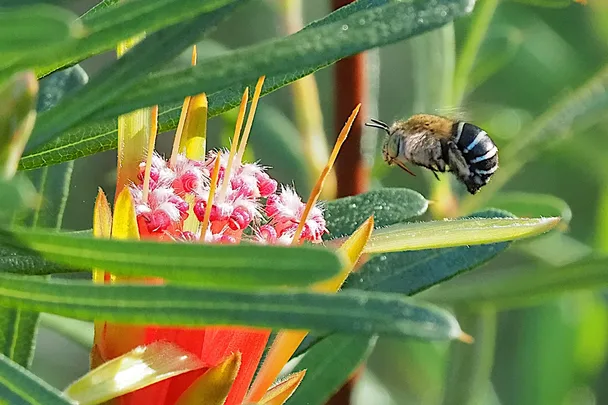
Some are vibrant in colour, have identifiable patterns, like the stripy Blue-Banded Bee, are shiny and furry, or even come in vivid metallic colours.
When determining whether you’ve spotted a native bee, it is best first to rule out any introduced species, which are quite common and usually easy to spot.
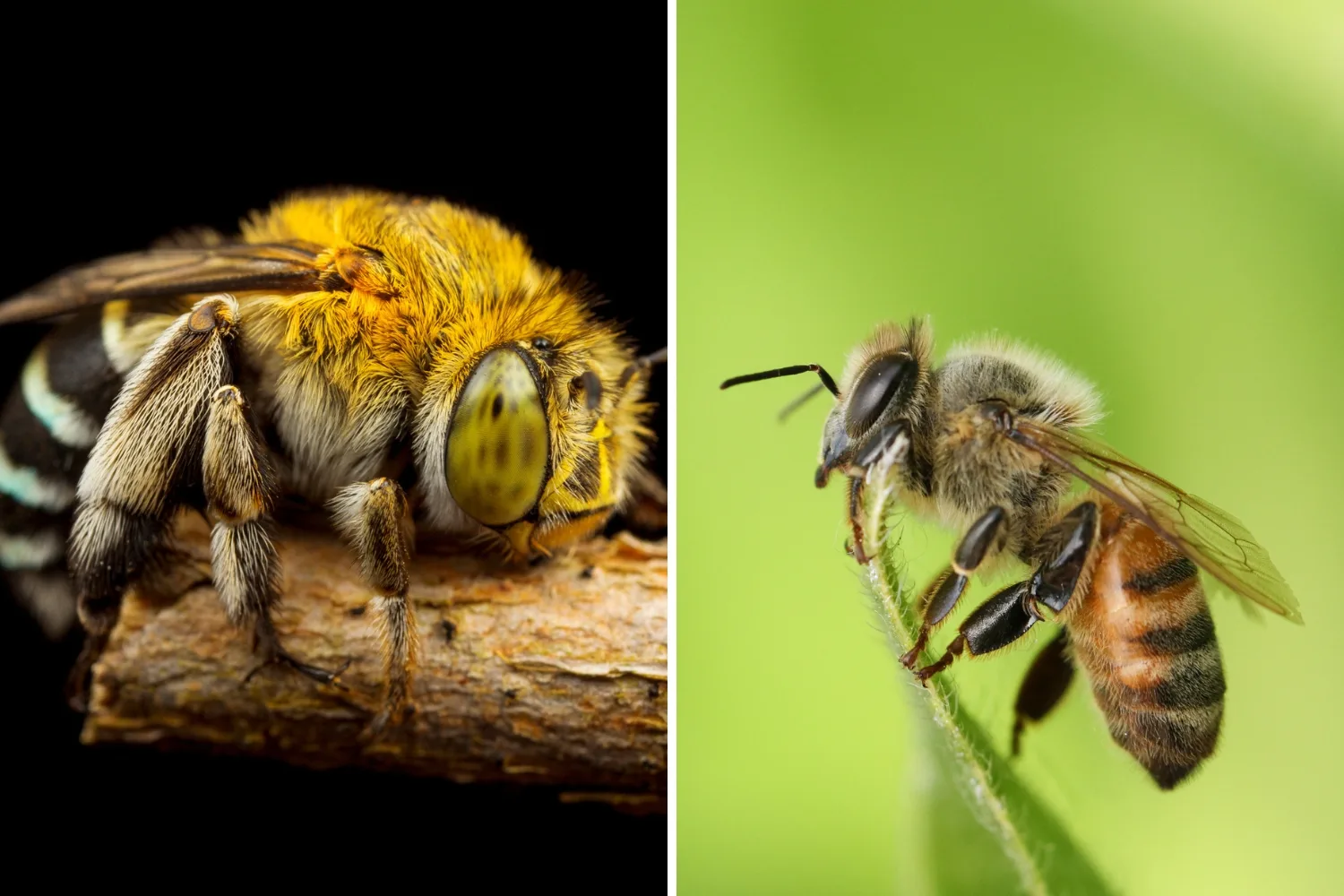
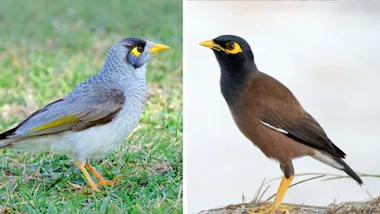
As you can see in the image above, the blue-banded bee (Amegilla) on the left-hand side is colourful and has blue stripes running down its back.
On the right, the European honey bee (Apis mellifera) is a more common sight.
If you do happen across a bee in your garden and want to know what kind it is, you can use the Aussie Bee website identifier flow chart to help you.
How to care for Australian native bees
Australian native bees are currently under threat, mainly due to disease and habitat loss. While fighting disease is not something that can be done by the individual, creating areas in your garden to support bee pollination and building of safe habitats definitely is.
We spoke to Clancy Lester, self-named ‘Bee Man’ of Australia, about how the wider public can help bees thrive.
1. Create a biodiverse garden
Your garden can become a haven for native bees and other Aussie wildlife to live in. The best way to start promoting biodiversity in your backyard is simple: by planting native plants!
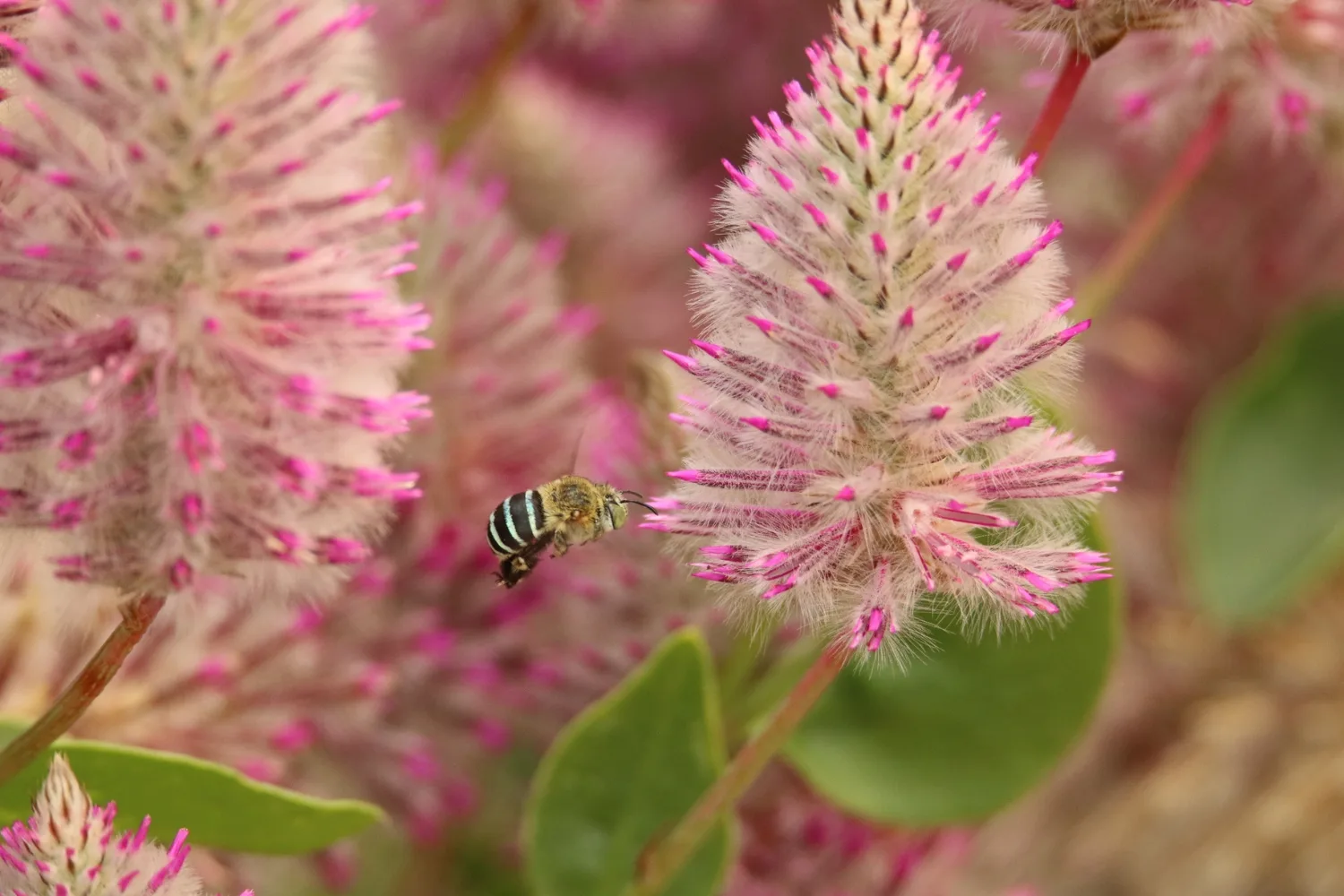
From wildflowers, like the ptilotus above, to choosing native lawn alternatives instead of grass, your garden can help Aussie animals, insects and birds thrive.
The CSIRO recommends using native wildflowers that bees can pollinate so they can help your garden in return. Clancy recommends the following native species families for helping bees thrive:
- Myrtaceae (including gum trees, bottlebrush, paperbark and lilly-pillies)
- Fabaceae (wattles and native peas including hardenbergia)
- Proteaceae (banksias and grevilleas)
- Asteraceae (daisies such as Brachyscome)
- Goodeniaceae (fan flowers).
- Wahlenbergia (native bluebells)
- Bursaria and Xanthorrhoea (grass trees)
And the best place to find all of these natives? Your local plant nursery.
2. Build a ‘bee hotel’
Unlike European bees, most Aussie native bees are solitary creatures. This means that a female bee will make a nest by herself in hollowed out wood, including in tree trunks, fallen logs and branches.
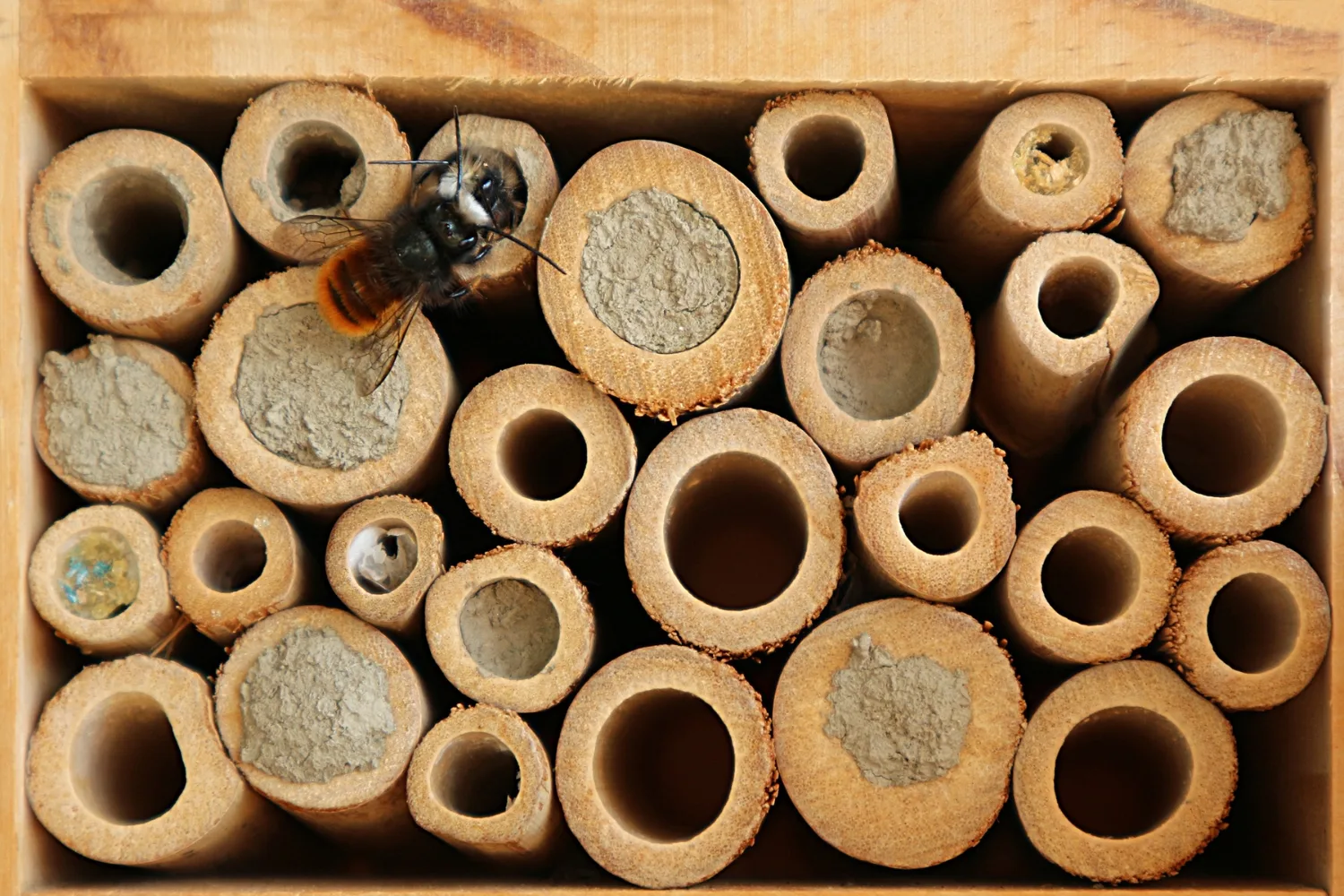
One of the best ways to help the bees is by creating a ‘bee hotel’ to house the lodger bees, which will happily build their nest in already pre-existing holes. Clancy has got a wealth of knowledge in building bee hotels, and these are his three favourite ways to do it:
Build it yourself
Get a block of natural hardwood and drill holes 2–10mm wide (have different sizes to appeal to different bees) and 80–120mm deep.
Adapt a tree log
You can also adapt a small hollow tree log. Drill long holes around the perimeter of the log. Pack bits of bamboo tightly in the middle of the log to give the bees even more room to stay. Keep the structure dry, sheltered, and positioned in full sun, ideally facing north or north-east.
Use reeds, ferns, and flower stems
Female Hylaeinae (masked and wasp mimic) bees and Exoneura (reed) bees favour reeds, fern fronds and hollow flower stems to provide for their young. You can mimic this by putting bundles of bamboo or pruned flower stems (such as kangaroo paw) inside PVC pipe with the hollows facing the morning sun.
3. Raise awareness
Finally, raising awareness about the importance of native bees is essential to keeping them healthy and happy.
Just as you have created a safe home for them to live in, by raising awareness with friends and family, they too can build ‘bee hotels’ and plant more native species to support the bees!
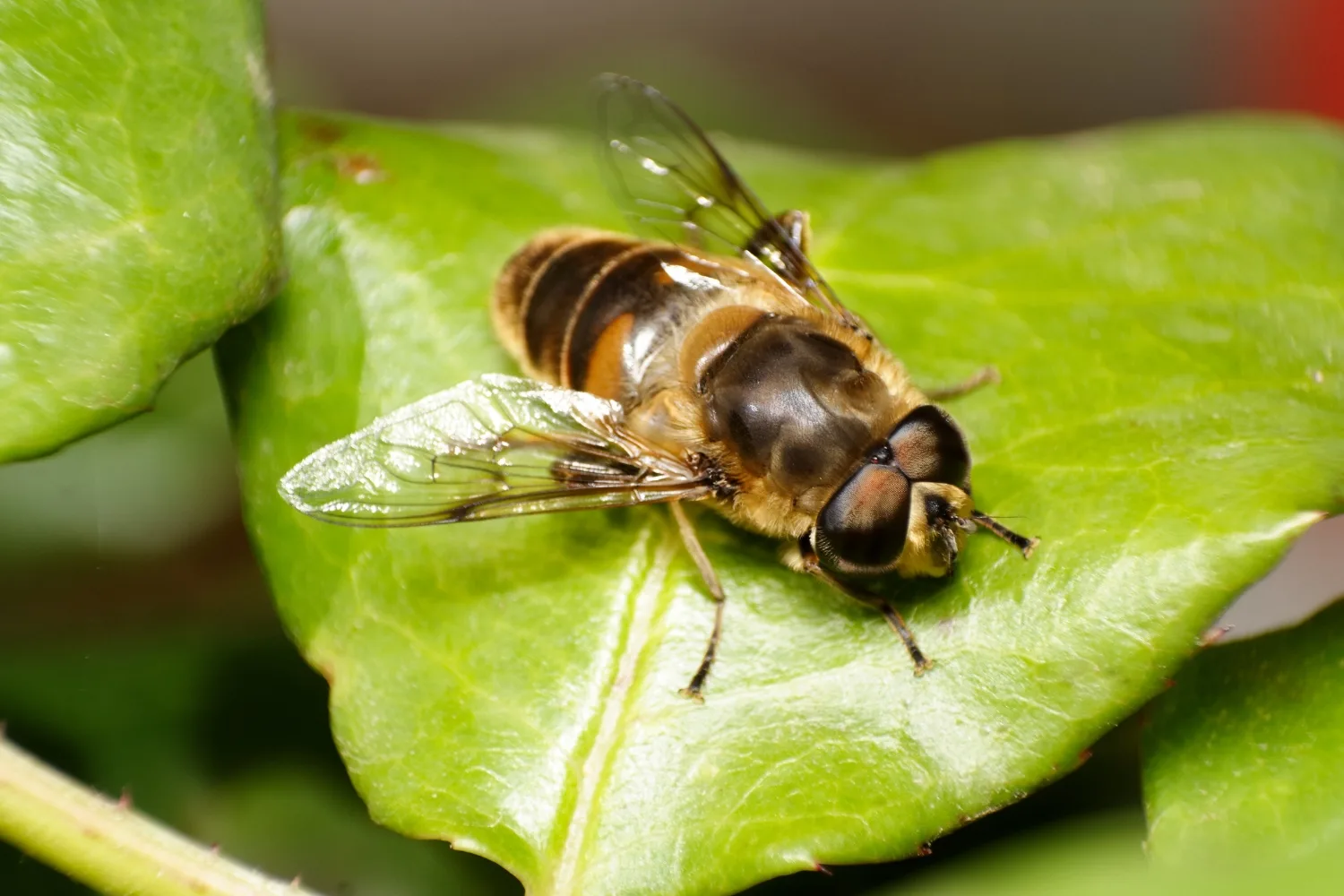
You can also contribute your own bee data to helpful collection apps like iNaturalist as a way to keep track of native species and interactions in your local area. Make sure to check out Clancy the Bee Man’s extensive knowledge on native bees and building diversity.

Related stories
Native ad body.
Native ad body.
Lawn envy is real, here’s how to have the best on the block
Native ad body.