
Want greener, thicker grass? Dethatching is a key step you may be missing.
Whether you have warm-season grasses such as Kikuyu or cool-season varieties, like fescue, taking the time to detach your grass can lead to a thicker and greener lawn.
What is dethatching?
Dethatching is the process of removing the thatch layer, a buildup of dead grass, roots, and organic matter that settles between your soil and grass. While it’s completely normal for grass to have a small amount of thatch, thick thatch (more than 1.2cm) can block water, nutrients, and air from reaching the grass roots, leading to poor lawn health.
Benefits of dethatching
Removing the thatch layer helps water and nutrients reach the soil more easily, reduces the risk of fungal diseases, and encourages deeper, stronger root growth.
Dethatching also helps prepare your lawn for fertilising and overseeding, which allows new grass to establish. It can improve drainage and prevent issues such as waterlogging and compacted soil, resulting in a more resilient and healthier lawn overall.
When to dethatch a lawn?
Timing is essential when dethatching your lawn, and the best season varies, depending on your grass type. For warm-season grasses like Kikuyu, Zoysia, and buffalo, dethatching should be done in late spring to early summer, when the grass is actively growing.
Cool-season grasses, like fescue and ryegrass, should be dethatched in early autumn or early spring. Avoid dethatching during extreme heat or drought, as stressed grass may struggle to recover.
Does my lawn need dethatching?
A simple yet effective way to determine if your lawn needs dethatching is to perform a screwdriver test. Push a flat-head screwdriver into the soil; if it’s difficult to penetrate or meets resistance just below the surface, a thick thatch layer could be the cause.
Ideally, the screwdriver should slide in easily when the soil is moist. If you feel a spongy layer or the tool stops around 1 to 2 centimetres down, it’s a good sign your lawn may benefit from dethatching.
That being said, dethatching isn’t something most lawns require every year. In fact, a thin layer of thatch (around 1/2 cm) can actually benefit your lawn by helping it retain moisture and suppress weeds. However, if your lawn feels spongy, shows signs of poor drainage, or you’re planning to overseed, dethatching can improve seed-to-soil contact and boost new growth. For many well-maintained lawns, especially if you’re regularly mowing, aerating and clearing debris, dethatching is optional but not essential.
How to dethatch your lawn: 3 effective methods
1. Using a dethatching rake (manual)
Best for: Small lawns or areas with a light thatch layer.
If your lawn is small or only has a thin layer of dead grass and roots, you can use a simple dethatching rake, with sharp, curved blades. First, mow your lawn short so you can see the dead layer better. Then use the rake with a firm, downward pull to lift out the dead grass and material. You might be surprised how much you remove.
Once the thatch has been loosened, go over the area with a leaf rake to gather and remove all the debris. Finish by watering your lawn thoroughly to help it recover. If the soil feels compacted after dethatching, consider aerating the soil to improve airflow and applying a fertiliser.
2. Using a power rake
Best for: Medium to large lawns with moderate to heavy thatch build-up.
For bigger lawns or if you have a thick layer of dead grass and roots, a power rake (a machine that pulls up the dead layer quickly) is a better choice. These are readily available for rent from a hardware or garden store.
Cut your lawn short first so the machine can reach the dead layer.
Set the machine’s blades just deep enough to reach the dead layer, but not so deep that they damage the healthy grass. Move over your whole lawn, going in one direction and overlapping passes as you go, especially where the dead layer is thick.
Afterwards, rake or sweep up the dead material you pulled up.
Water your lawn thoroughly and apply lawn food to encourage new grass growth. If your soil is hard or you see bare spots, consider poking small holes in the ground (core aeration) and scattering fresh grass seed to help it fill in.
3. Using a verticutter or specialised dethatching machines
Best for: Severe thatch problems, compacted soil, or professional-grade lawn care.
If your grass has a thick, stubborn layer over 2 centimetres, or if raking hasn’t worked, you might need bigger equipment. A verticutter (also called a vertical mower or slit seeder) uses spinning blades to cut through the dead layer and soil, pulling up what basic rakes can’t handle.
Lawn services often use this method for lawns with a lot of dead material or hard soil, where grass roots can’t grow well. Cutting into the soil also helps new seeds settle in when you want to fill in thin spots.
However, using a verticutter is intense and can stress your lawn initially, especially if you do it at the wrong time or when your grass is already weakened. Use this only if the dead layer is more than 2 centimetres thick, and make sure your grass is actively growing so it can recover well.
Preparing for dethatching
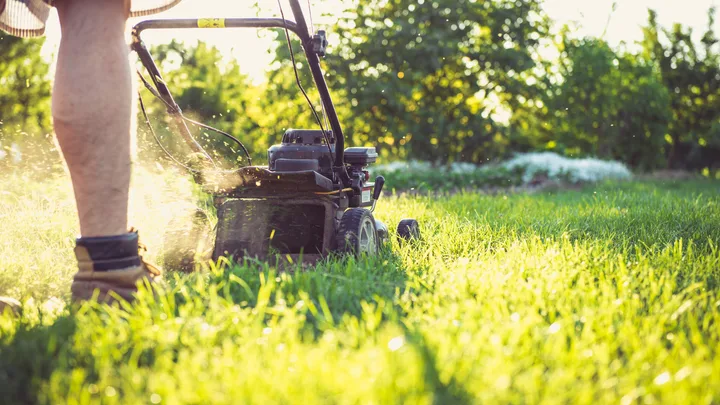
Before you start dethatching, take a few simple steps to prepare your lawn correctly. Mow the grass short about one to two days beforehand to make the thatch more accessible. Mark any sprinkler heads, pipes, or other hidden obstacles to avoid damaging them during the process.
You want the soil to be damp but not soggy, as wet soil allows rakes to work more effectively.
Post-dethatching lawn care
Dethatching can stress your turf, so follow up with:
- Watering: Deeply water your lawn within 24 hours.
- Fertilising: Apply a balanced fertiliser to replenish nutrients.
- Overseeding: For patchy lawns, apply fresh seed to encourage new growth.
- Regular mowing: Resume mowing once the new grass reaches approximately 7–8 cm.

Related stories

Native ad body.

Native ad body.

Lawn envy is real, here’s how to have the best on the block
Native ad body.